
Phishing Attack Prevention: Strategies for Modern Data Protection
Discover comprehensive strategies for phishing attack prevention, including technical controls, psychological insights, and AI-driven security measures.
Phishing remains the most persistent and pervasive threat in the global cybersecurity landscape. Despite the multi-billion dollar investments in sophisticated firewall technologies and intrusion detection systems, cybercriminals continue to find success by targeting the most vulnerable element of any security infrastructure: the human user. Phishing is a form of social engineering where attackers deceive individuals into revealing sensitive information, such as login credentials, financial details, or proprietary corporate data. As we move further into a digitized economy, the sophistication of these attacks has evolved from generic, poorly written emails to highly targeted, data-driven operations that can bypass traditional security filters. Protecting an organization requires a multi-layered approach that combines rigorous technical safeguards with a deep understanding of the psychological triggers that make phishing so effective.
The Anatomy of Modern Phishing Attacks
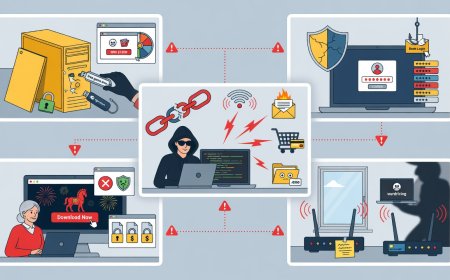
The term phishing has expanded to encompass a wide variety of specialized attack vectors, each designed to exploit specific situational vulnerabilities. To build a robust defense, security professionals must first understand the distinctions between these methodologies. Generic phishing involves mass-scale campaigns where millions of emails are sent to random addresses, hoping that a small percentage of recipients will take the bait. However, the industry has seen a significant shift toward Spear Phishing. This is a targeted attempt to steal sensitive information such as account passwords or financial data from a specific victim. These attackers often gather personal information about their targets from social media and professional networking sites to make the lure appear authentic.
Beyond spear phishing, we encounter Whaling, which targets high-profile victims like C-suite executives. These attacks are particularly dangerous because executives often have elevated access privileges and the authority to authorize large financial transactions. Another emerging threat is Business Email Compromise (BEC), where an attacker impersonates a company official or a trusted partner to trick employees into transferring funds or sensitive files. Furthermore, the rise of mobile communication has given birth to Smishing (SMS phishing) and Vishing (voice phishing), where attackers use text messages or phone calls to create a sense of urgency and bypass the visual scrutiny often applied to emails.
The Psychological Triggers of Deception
Why does phishing continue to work? The answer lies in the exploitation of human psychology. Attackers leverage specific cognitive biases to bypass critical thinking. The most common trigger is Urgency. By creating a scenario where a user must act immediately—such as a fake notification that an account will be deleted or a legal threat—the attacker forces the victim to skip the verification process. Authority is another powerful tool; an email appearing to come from the CEO or a government agency often compels compliance without question.
Social proof and curiosity also play significant roles. An attacker might send a document titled "Q4 Salary Adjustments" to an entire department, banking on the fact that curiosity will outweigh security training. Understanding these psychological levers is essential for prevention. It allows organizations to move beyond simply telling employees "don't click links" and instead teaches them to recognize the emotional manipulation inherent in modern social engineering attempts.
Implementing Technical Defense Layers
While human education is vital, technical controls serve as the necessary first line of defense to reduce the volume of threats that actually reach a user's inbox. A critical component of this defense is the implementation of email authentication protocols. SPF (Sender Policy Framework) allows a domain owner to specify which mail servers are authorized to send emails on their behalf. DKIM (DomainKeys Identified Mail) adds a cryptographic signature to emails, ensuring that the content has not been tampered with in transit. Finally, DMARC (Domain-based Message Authentication, Reporting, and Conformance) ties these two protocols together, providing instructions to receiving servers on how to handle emails that fail authentication.
Beyond authentication, organizations should deploy Secure Email Gateways (SEG) that utilize behavioral analysis and machine learning to identify suspicious patterns. These systems can sandbox attachments to check for malware and rewrite URLs to scan them at the time of the click, rather than just when the email is delivered. Furthermore, Multi-Factor Authentication (MFA) is perhaps the single most effective technical control. Even if an attacker successfully phishes a user's password, MFA provides a secondary barrier that is significantly harder to bypass, effectively neutralizing the stolen credential.
Cultivating a Culture of Security Awareness
Technological solutions are never foolproof; therefore, the workforce must be transformed into a "human firewall." This is achieved through continuous Security Awareness Training (SAT). Effective training must move away from infrequent, boring presentations toward interactive, real-world simulations. By sending controlled, simulated phishing emails to employees, organizations can identify which departments or individuals are most at risk and provide targeted follow-up education.
Crucially, a culture of security must be one of empowerment, not fear. If an employee realizes they have clicked on a suspicious link, they should feel comfortable reporting it immediately to the IT department without fear of retribution. Rapid reporting is the difference between a minor incident and a full-scale data breach. Organizations should implement a "one-click" reporting button in their email clients to make this process as seamless as possible. When reporting becomes a habit, the collective vigilance of the staff becomes a powerful detection mechanism.
Incident Response and Mitigation
Prevention strategies must be coupled with a robust incident response plan. When a phishing attack succeeds, time is the most critical factor. An effective response includes automatically isolating the affected device from the network to prevent lateral movement. Security teams should have the tools to perform "search and destroy" operations, where a identified phishing email is globally deleted from all user inboxes within seconds of the first report. Additionally, password resets and session revocations must be automated for compromised accounts. Post-incident analysis is also vital; every successful phish provides valuable data on where the current defenses failed, allowing for iterative improvements to both technical filters and training modules.
The Future of Phishing: AI and Deepfakes
As we look forward, the emergence of Generative Artificial Intelligence (AI) is drastically altering the phishing landscape. Attackers are now using Large Language Models (LLMs) to generate perfectly phrased, multilingual emails that lack the traditional red flags of poor grammar and spelling. Even more concerning is the rise of Deepfake technology, where attackers can clone the voice or video likeness of a company executive in real-time. This elevates vishing to a level of realism that was previously impossible. Defending against these AI-driven threats will require organizations to adopt AI-powered security tools that can analyze metadata and communication patterns at a scale human analysts cannot match.
Conclusion: A Holistic Approach to Resilience
Phishing attack prevention is not a one-time project but a continuous cycle of assessment, protection, and education. It requires a synergy between the IT department, HR, and the executive leadership. By combining advanced technical protocols like DMARC and MFA with a psychologically informed training program, organizations can significantly reduce their risk profile. In the front lines of cybersecurity, the goal is to create an environment where technology filters out the majority of threats, and a vigilant, well-trained workforce identifies the few that remain. Protecting users and data in this complex era demands nothing less than a holistic, proactive, and relentless commitment to security excellence.
What's Your Reaction?
 Like
0
Like
0
 Dislike
0
Dislike
0
 Love
0
Love
0
 Funny
0
Funny
0
 Wow
0
Wow
0
 Sad
0
Sad
0
 Angry
0
Angry
0

At KREATOR, we are building a hub for original content. We believe that quality ideas deserve to be seen and that writers deserve to be paid for their effort. This is a space where you can showcase your research, share your hobbies, or post your professional skills. By publishing here, you are contributing to a community where ideas matter. Subscribe to our newsletter, read the latest articles, and remember: your voice is valuable. Let’s build something great together.










Comments (0)