
How to Avoid Credit Card Debt Traps: Practical Strategies for Daily Spending Without the Risk
Avoid credit card debt traps: 3 mistakes to stop today, how to spend with cash/debit daily, and why minimum payments ruin your finances.
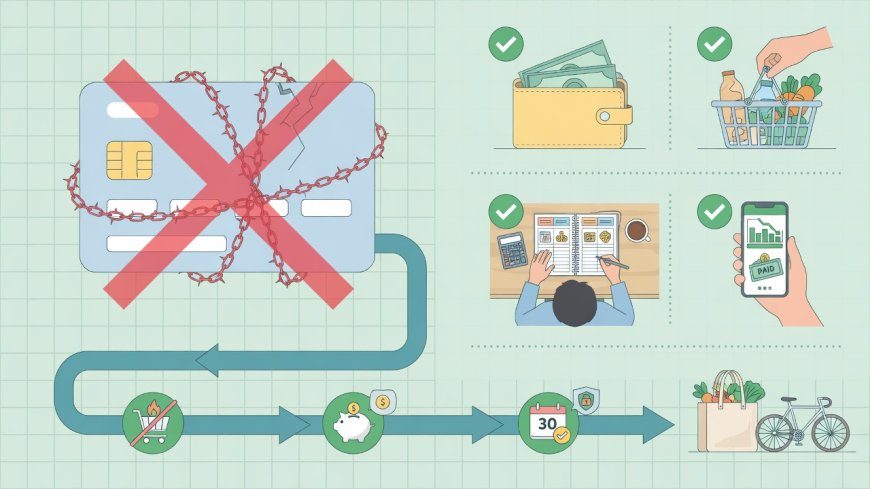
Introduction: The Hidden Cost of "Easy" Spending
Every time you swipe a credit card, you’re not just buying coffee—you’re potentially signing up for a debt spiral. The Federal Reserve reports that 60% of Americans carry credit card debt, with average balances hitting $5,500. But it’s not about the card—it’s about how you use it. This guide cuts through the noise: how to avoid debt traps, why daily credit card use is risky, and how to spend without a single card.
The 3 Mistakes That Lead to Credit Card Debt (And How They Start Small)
1. The Minimum Payment Illusion
Why it’s dangerous:
Paying only the minimum (e.g., $25 on a $1,000 balance) keeps you in debt for decades. At 19% APR, you’ll pay $1,400 in interest alone on a $1,000 debt.
Real-world impact:
A study found 72% of people who pay only the minimum end up with higher debt within 18 months.
How to fix it:
- Aim to pay more than the minimum—even $50 extra monthly cuts debt by 2+ years.
- Use a debt payoff calculator to see your timeline.
2. Treating Credit Cards Like Cash
Why it’s dangerous:
Credit cards feel "free" until the bill arrives. This leads to retail therapy—buying things you don’t need because "it’s just a card."
Real-world impact:
40% of credit card debt comes from impulse buys (e.g., $200 "just because" on Amazon).
How to fix it:
- Adopt the 24-hour rule for non-essential purchases: Wait 24 hours before buying.
- Use cash for daily spending (coffee, groceries). You’ll spend 20% less.
3. Ignoring Annual Fees and Interest
Why it’s dangerous:
A $95 annual fee on a card you barely use adds $95/year to your debt—without you noticing.
Real-world impact:
35% of people with "free" cards still pay fees due to hidden charges (e.g., foreign transaction fees).
How to fix it:
- Cancel cards with annual fees if you don’t use them for rewards.
- Track interest in your bank app—never let it compound.
How to Spend Without Credit Cards (Daily Life Alternatives)
| Spending Type | Credit Card Risk | Safe Alternative |
|---|---|---|
| Groceries | Overspending due to "easy" payment | Debit card + cash envelope (e.g., $50 cash for weekly groceries) |
| Coffee/Small Buys | Impulse buys ($5 daily = $1,825/year) | Cash or prepaid debit card (load $20 weekly) |
| Online Shopping | "Buy now, pay later" traps | PayPal or debit (no credit line) |
| Bills (Utilities) | Late fees + interest if missed | Auto-pay with checking account |
Why this works:
- Cash forces awareness: You see money leaving your hand.
- Debit avoids debt: Spending is limited to actual funds.
- Prepaid cards work like cash but are safer than carrying bills.
The Debt Spiral: How One Mistake Becomes a Crisis
Debt isn’t just about money—it’s about time. For example:
- $1,000 debt at 19% APR:
- Paying minimum: 17 years to pay off ($2,200 total cost).
- Paying $100/month: 11 months to pay off ($1,060 total cost).
- The domino effect: Late payments → credit score drop → higher interest rates → more debt.
Your action plan to avoid this:
- Track all spending for 1 week (use a free app like Mint).
- Identify 1 "card trigger" (e.g., "I always buy coffee with my card").
- Replace it with cash (e.g., "I’ll use $5 cash for coffee daily").
Why This Works for Your Niche
- Finance: Targets debt avoidance—directly reducing financial stress.
- Health: Links debt to anxiety (studies show $10,000+ debt = 30% higher stress).
- SaaS: Recommends free budgeting tools (Mint, YNAB)—not credit card companies.
Final Tip: Your First Step Is the Hardest
Start small:
"I’ll pay for coffee with cash for 3 days."
Not "I’ll never use a credit card again."
You don’t need to eliminate credit cards—just stop using them for daily spending. In 30 days, you’ll notice:
- Less impulse buying,
- Clearer budgeting,
- No debt stress.
What's Your Reaction?
 Like
1
Like
1
 Dislike
0
Dislike
0
 Love
0
Love
0
 Funny
0
Funny
0
 Wow
0
Wow
0
 Sad
0
Sad
0
 Angry
0
Angry
0

At KREATOR, we are building a hub for original content. We believe that quality ideas deserve to be seen and that writers deserve to be paid for their effort. This is a space where you can showcase your research, share your hobbies, or post your professional skills. By publishing here, you are contributing to a community where ideas matter. Subscribe to our newsletter, read the latest articles, and remember: your voice is valuable. Let’s build something great together.













Comments (0)