
Self-Insurance vs. Health Premiums: Which Financial Strategy Wins?
Explore the financial trade-offs between self-funding medical costs and paying high health insurance premiums to determine the best strategy for your needs.

Healthcare costs represent one of the most significant and unpredictable line items in the modern household budget. As premiums for private health insurance continue to climb, often outpacing annual inflation and wage growth, a growing number of individuals and small business owners are questioning the traditional model of risk transfer. The dilemma is stark: should one continue to pay substantial monthly premiums to an insurance provider for a safety net that may never be fully utilized, or is it more financially sound to redirect those funds into a dedicated, interest-bearing medical savings account? This decision requires a deep dive into actuarial risk, the mechanics of healthcare pricing, and the psychological comfort of guaranteed coverage versus the liquidity of personal savings.
The Philosophical Shift Toward Self-Funding
At its core, the argument for setting money aside—essentially a form of self-insurance—is rooted in the concept of opportunity cost. When a policyholder pays $800 a month in premiums, that money is effectively gone, regardless of whether they visit a doctor. Over a decade, that amounts to nearly $100,000 in capital that could have been invested in a diversified portfolio or a high-yield savings vehicle. Proponents of self-funding argue that for a healthy individual or family, the cumulative total of these premiums often far exceeds the actual cost of routine medical care, including annual check-ups, minor prescriptions, and occasional diagnostic tests. By retaining control over these funds, the individual captures the "float" that would otherwise contribute to the insurance company's profit margins.
However, the transition from a traditional policy to a self-funded model is not merely a change in accounting; it is a fundamental shift in risk profile. In a traditional insurance model, the individual pays a fixed cost to cap their potential liability. In a self-funded model, the individual assumes 100% of the risk up to the limit of their personal savings. While this offers the potential for significant long-term wealth accumulation, it demands a level of financial discipline that many find difficult to maintain. The temptation to dip into a "medical" fund for non-medical emergencies is a primary failure point for this strategy.
The Actuarial Reality of Catastrophic Costs
The primary flaw in the self-funding argument often lies in the underestimation of catastrophic medical events. While routine care is predictable and relatively affordable, the cost of a major cardiovascular event, an oncology diagnosis, or a complex orthopedic surgery can easily exceed $150,000 in a single week of hospitalization. For the vast majority of households, even a decade of saved premiums would not cover the full cost of a critical illness or a traumatic injury. This is where the "law of large numbers" benefits the insurance company. By pooling the risk of millions of individuals, insurers can afford to pay out million-dollar claims because the majority of their pool remains healthy.
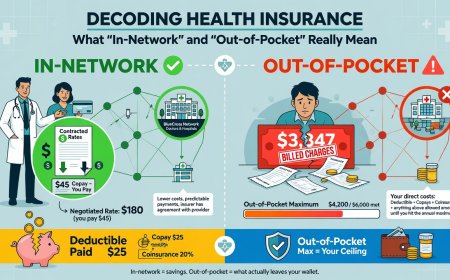
Without the protection of an insurance contract, a self-funded individual is exposed to the "chargemaster" rates of a hospital. These are the sticker prices for medical services, which are often three to five times higher than the rates negotiated by insurance companies. One of the most significant, yet frequently overlooked, benefits of paying insurance premiums is access to the insurer's negotiated network discounts. Even if a policyholder has not yet met their deductible, the mere fact that they have insurance often reduces a $2,000 MRI bill to an "allowed amount" of $600. For the uninsured or self-funded individual, negotiating these rates after the fact is an uphill battle that often ends in financial distress.
The Hybrid Solution: High-Deductible Plans and HSAs
For those looking to balance the benefits of self-funding with the security of traditional insurance, the High-Deductible Health Plan (HDHP) paired with a Health Savings Account (HSA) has emerged as a powerful middle ground. This strategy allows individuals to pay significantly lower premiums by accepting a higher initial out-of-pocket responsibility. The savings generated from the lower premiums are then deposited into an HSA, which offers a unique triple-tax advantage: contributions are tax-deductible, the growth is tax-free, and withdrawals for qualified medical expenses are tax-free.
This hybrid approach effectively allows an individual to self-insure for routine and mid-level medical needs while maintaining a "stop-loss" protection for catastrophic events. Once the out-of-pocket maximum is reached, the insurance company assumes full responsibility for further costs. This mitigates the primary risk of pure self-funding—unlimited liability—while still allowing the individual to build a significant medical nest egg that stays with them for life, even into retirement. Strategic financial planning often suggests that this is the most efficient way to manage healthcare costs for those with the cash flow to support a higher deductible.
Assessing Individual Risk Profiles
Deciding between these paths requires an honest assessment of several variables. Age is perhaps the most critical factor; as the biological risk of chronic illness increases with age, the mathematical viability of self-funding decreases. Similarly, an individual’s health history and lifestyle choices play a role. A person with a family history of chronic conditions may find that the "expensive" premium is actually a bargain when compared to the recurring costs of specialized care and maintenance medications. Conversely, a young, healthy professional with no dependents might find that the risk of a major event is low enough to justify a more aggressive self-funding or high-deductible strategy.
Another factor is the local healthcare landscape. In regions where hospital consolidation has led to a monopoly on services, the lack of competition often drives up prices for the uninsured. In such environments, the protection of a negotiated insurance rate becomes even more valuable. Conversely, in areas with a high density of independent clinics and "cash-pay" providers, a self-funded individual may find they can secure services for prices that are competitive with, or even lower than, insurance-negotiated rates.
The Importance of a Dedicated Reserve
If an individual chooses to forgo traditional high-premium insurance in favor of setting money aside, the structure of that reserve is paramount. It cannot simply be a sub-account in a standard checking or savings folder. To be effective, it should be treated with the same legal and psychological weight as a formal insurance policy. This means the funds must be liquid enough to be accessed in an emergency but sufficiently isolated to prevent impulsive spending.
- Establish a dedicated high-yield account specifically for medical contingencies.
- Calculate the "maximum out-of-pocket" cost of a standard silver-level insurance plan and aim to save at least double that amount.
- Research the cost of common procedures in your area to ensure your savings goals are realistic.
- Consider a "catastrophic-only" policy as a safety net if you are under the age of 30.
Final Analysis: Is One Truly Better?
The question of whether setting money aside is better than paying premiums does not have a universal answer; it has a mathematical one based on individual circumstances. For the risk-averse, the peace of mind provided by a comprehensive premium is worth the loss of potential investment gains. For the financially disciplined and healthy, the accumulation of a private medical fund can lead to significant long-term wealth and autonomy over healthcare decisions. However, the most dangerous path is the middle one: opting out of insurance without a rigorous, disciplined, and well-funded savings strategy. Without a robust reserve, what began as a cost-saving measure can quickly transform into a life-altering financial crisis. Ultimately, the best strategy is often the one that provides the highest level of protection against the most unlikely, but most devastating, financial outcomes.
What's Your Reaction?
 Like
0
Like
0
 Dislike
0
Dislike
0
 Love
0
Love
0
 Funny
0
Funny
0
 Wow
0
Wow
0
 Sad
0
Sad
0
 Angry
0
Angry
0

At KREATOR, we are building a hub for original content. We believe that quality ideas deserve to be seen and that writers deserve to be paid for their effort. This is a space where you can showcase your research, share your hobbies, or post your professional skills. By publishing here, you are contributing to a community where ideas matter. Subscribe to our newsletter, read the latest articles, and remember: your voice is valuable. Let’s build something great together.












Comments (0)