Micro-Investing Apps: Robinhood vs Acorns vs Stash Guide
Discover the best micro-investing apps for beginners. Compare Robinhood, Acorns, and Stash to start building wealth with just your spare change.
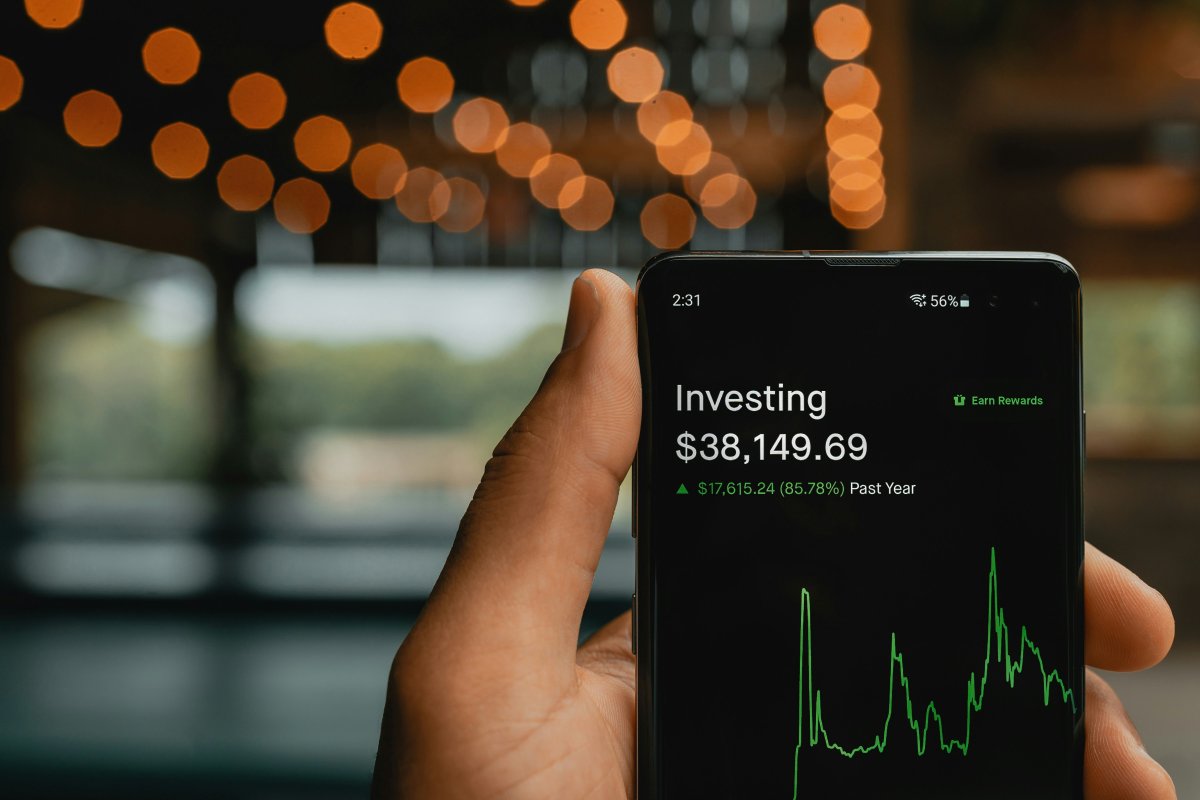
Ever felt like the stock market was a private club for people with monocles and mahogany desks? For a long time, it actually was. Back in the day, if you wanted to buy a single share of a high-priced company, you needed hundreds or even thousands of dollars just to get through the door. Then came the commissions—hefty fees that bit into your profits before you even made any. But the digital revolution changed the game. Enter the era of micro-investing. If you have five bucks and a smartphone, you are now officially an investor. The barrier to entry hasn't just been lowered; it has been demolished. Today, we are diving deep into the world of micro-investing apps, specifically the big three: Robinhood, Acorns, and Stash. We will figure out which one fits your vibe and how you can start growing a portfolio without eating ramen for a month.
The Magic of Fractional Shares
Before we look at the specific apps, we need to talk about the 'secret sauce' that makes micro-investing possible: fractional shares. In the old world, if a share of Amazon was trading at $3,000, you needed $3,000 to own it. With fractional shares, you can buy $5 worth of Amazon. You own a tiny slice—a fraction—of that share. This is the cornerstone of micro-investing. It allows you to build a diversified portfolio even if you are starting with the change you found in your couch cushions. When you combine this with the removal of traditional trading commissions, you get a system where every dollar you save can immediately go to work for you. It is about time in the market, not timing the market, and these apps make 'time in the market' accessible to everyone.
Acorns: The King of Passive Investing
If you are the kind of person who wants to invest but forgets to check your bank balance for three days at a time, Acorns was built for you. Their flagship feature is the 'Round-Up.' Here is how it works: you link your debit or credit card to the app. When you buy a coffee for $3.50, Acorns rounds that transaction up to the nearest dollar ($4.00) and invests the $0.50 difference into a diversified portfolio of ETFs (Exchange Traded Funds). It is essentially a digital spare change jar that grows. You don't even feel the money leaving your account, but over a month, those fifty-cent increments can easily turn into $30, $50, or $100.
Acorns keeps it simple. You don't pick individual stocks like Apple or Tesla. Instead, you answer a few questions about your financial goals and risk tolerance, and Acorns slots you into one of five portfolios ranging from 'Conservative' to 'Aggressive.' These portfolios are designed by experts and include thousands of stocks and bonds. It is the ultimate 'set it and forget it' tool. However, it is not free. Acorns operates on a subscription model, typically starting at $3 per month. While $3 sounds small, if you only have $100 in your account, that is a 3% monthly fee—which is actually quite high. Acorns makes the most sense once you have a few hundred dollars flowing through the app regularly.
Robinhood: The DIY Powerhouse
Robinhood is the app that famously 'democratized' finance and forced the rest of the industry to drop their trading fees. Unlike Acorns, Robinhood is a self-directed brokerage. This means you are in the driver's seat. You decide exactly which stocks, ETFs, or cryptocurrencies to buy. If you want to own $1 of Bitcoin, $5 of Nvidia, and $10 of an S&P 500 index fund, you can do that with a few taps. The interface is famously clean and intuitive—some say it is almost too easy to use, making it feel a bit like a game.
The biggest draw for Robinhood is the lack of monthly subscription fees for the basic tier. There are no commissions on trades, and there is no fee just to have the account open. This makes it a fantastic choice for the 'micro-investor' who wants to learn the ropes of the market without being eaten alive by monthly costs. Robinhood also offers a premium service called Robinhood Gold, which gives you higher interest on uninvested cash and access to professional research, but for most beginners, the free version is more than enough. The downside? You have to be disciplined. Since the app doesn't automatically invest for you (unless you set up recurring investments), you have to remember to put money in and choose what to buy.
Stash: The Educational Middle Ground
Stash occupies a unique space between the automation of Acorns and the freedom of Robinhood. Like Acorns, it charges a monthly subscription fee (starting around $3). Like Robinhood, it allows you to pick your own stocks and ETFs. But where Stash really shines is in its curated approach to investing. Instead of just giving you a list of every ticker symbol on the New York Stock Exchange, Stash categorizes investments into 'themes.' You can invest in 'Clean Energy,' 'Data Defenders,' or 'American Innovators.' This helps beginners align their money with their values or interests without needing to be a Wall Street analyst.
Stash also places a heavy emphasis on education. The app is packed with bite-sized articles and tips to help you understand what you are doing. One of their coolest features is the 'Stock-Back' card. It is a debit card that, instead of giving you 1% cash back on purchases, gives you 1% 'stock back.' If you buy a burrito at Chipotle with your Stash card, they might give you a tiny fraction of Chipotle stock. It is a clever way to turn everyday spending into a growing portfolio. Stash is great for the person who wants to be involved in picking their investments but wants a guided, educational experience to hold their hand along the way.
The Hidden Math: Fees vs. Growth
We need to have a serious talk about fees because they are the silent killer of small portfolios. Let's say you choose an app that charges $3 a month. That is $36 a year. If you have $100 invested and you make a 7% return, you earned $7. But you paid $36 in fees. You are actually down $29. This is the 'Micro-Investing Trap.' To make a subscription-based app like Acorns or Stash worth it, you need to reach a 'break-even' point where your gains (and the value of the automation/education) outweigh the cost.
For most people, this means you should aim to get at least $500 to $1,000 into the account as quickly as possible. If you are starting with very small amounts—say, $5 or $10 a week—Robinhood might be the better choice because the $0 fee structure allows your tiny amounts to grow without being chipped away. However, if the automation of Acorns is the only reason you are saving money at all, then the $3 fee is a small price to pay for building a habit you wouldn't otherwise have. The best app is the one you will actually use.
Where Should You Start?
Choosing your first app depends entirely on your personality. Ask yourself: How much work do I want to do?
- The Passive Saver: If you want to save money without thinking about it, go with Acorns. The round-ups will build your balance in the background while you live your life. It is the best way to prove to yourself that you can, in fact, afford to invest.
- The Curious Learner: If you want to understand the 'why' behind the market and want a guided experience, Stash is a solid choice. It simplifies the overwhelming world of stocks into digestible themes and provides the educational guardrails you might need.
- The Active Explorer: If you want total control and want to avoid monthly fees, Robinhood is the winner. It is perfect for those who want to research companies, follow the news, and build a custom portfolio from scratch.
A Step-by-Step Launch Plan
Ready to pull the trigger? Here is how to start today. First, pick your platform based on the profiles above. Don't overthink it; you can always move your money later. Second, start small. You don't need a windfall. Put in $10 or $20 just to see how the interface works. Third, set up a recurring contribution. Even $5 a week is powerful. This uses a strategy called Dollar-Cost Averaging, where you buy more shares when prices are low and fewer when prices are high, smoothing out your average cost over time.
Fourth, ignore the daily noise. The stock market goes up and down. Some days your $50 will be worth $48. Other days it will be $52. Micro-investing is a long-term game. The goal isn't to get rich by Friday; it is to build a wealth-building habit that will last for decades. Finally, increase your contributions as you get more comfortable. When you get a raise or find yourself spending less on takeout, bump that $5 weekly investment to $10. You will be amazed at how quickly 'micro' amounts turn into 'macro' results.
The Power of Starting Small
The most important thing to remember is that the amount you start with matters far less than the date you start. Compound interest is the eighth wonder of the world, but it requires time to work its magic. By using micro-investing apps, you are claiming your seat at the table. You are no longer a bystander in the global economy; you are an owner. Whether you are rounding up your morning latte or buying a fraction of a tech giant, you are taking a definitive step toward financial freedom. The mahogany desks and monocles are gone—the market belongs to you now.
What's Your Reaction?
 Like
0
Like
0
 Dislike
0
Dislike
0
 Love
0
Love
0
 Funny
0
Funny
0
 Wow
0
Wow
0
 Sad
0
Sad
0
 Angry
0
Angry
0

At KREATOR, we are building a hub for original content. We believe that quality ideas deserve to be seen and that writers deserve to be paid for their effort. This is a space where you can showcase your research, share your hobbies, or post your professional skills. By publishing here, you are contributing to a community where ideas matter. Subscribe to our newsletter, read the latest articles, and remember: your voice is valuable. Let’s build something great together.











Comments (0)